
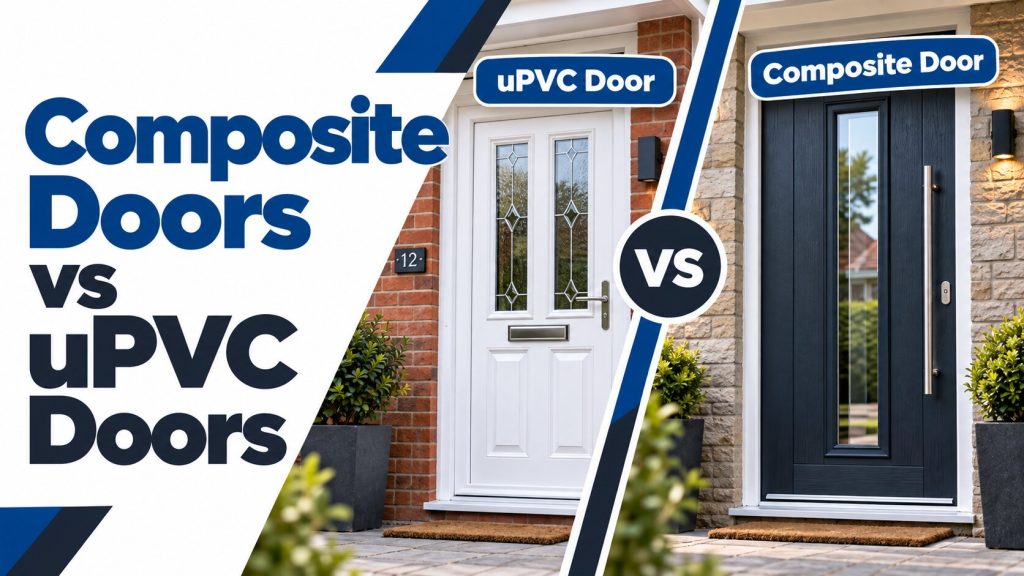
Composite doors offer superior security, insulation and longevity (often 30+ years), while uPVC doors are the budget-friendly, low-maintenance choice that typically lasts 20–25 years. Composite suits homeowners wanting a premium front door; uPVC works well for cost-conscious replacements. The right pick depends on your budget, property and priorities.
Which should you choose?
Your front door does a lot of heavy lifting. It keeps you warm, keeps intruders out, and it’s the first thing anyone notices when they visit. So when it comes time to replace a tired, draughty old door, the big question tends to be the same: composite doors vs uPVC doors—which one’s actually right for your home?
We’ve been fitting doors across Essex for over 35 years, so we’ve had this conversation more times than we can count. Both materials are genuinely good options. But they’re built differently, they perform differently, and they suit different homes and budgets.
In this guide, we’ll break down the differences in durability, security and appearance—plus a few extras that matter, like warmth, upkeep and cost. If you’d rather skip the reading and just talk it through, we’re always happy to advise.
Composite vs uPVC doors at a glance
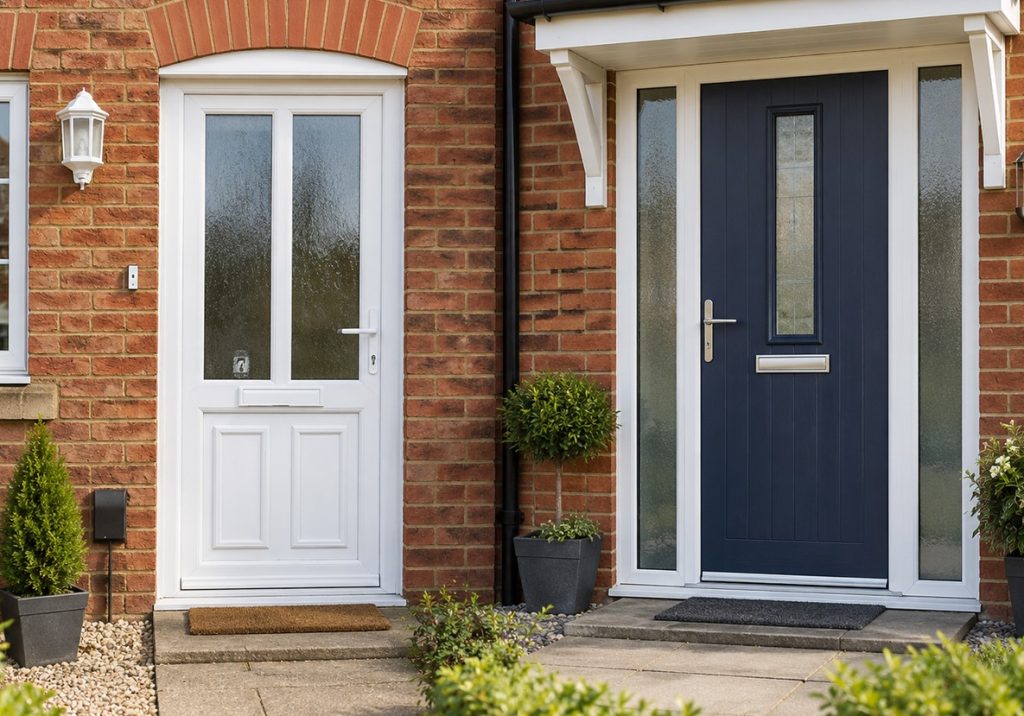
Short on time? Here’s the quick version:
- Best for security: Composite doors
- Best for a premium, timber-look finish: Composite doors
- Best for tight budgets: uPVC doors
- Best for low-fuss, practical replacements: uPVC doors
- Best for longevity: Composite doors (often 30+ years vs 20–25 for uPVC)
- Best for warmth and insulation: Composite doors (though quality uPVC performs well too)
Now, the detail.
What’s the difference between a uPVC door and a composite door?
The main difference comes down to what each door is made of—and that shapes everything else.
A uPVC door is made from unplasticised polyvinyl chloride, a rigid, weather-resistant plastic. Modern uPVC doors often include steel reinforcement inside the frame for added strength, along with multi-point locking as standard. They’re lightweight, affordable and easy to look after.
A composite door is built from several materials layered together—typically a solid timber core (or insulating foam) wrapped in a tough outer skin, usually GRP (glass reinforced plastic) or ABS. That’s the same stuff LEGO bricks are made from, if you want a sense of how durable it is. This layered build is what gives composite doors their strength, rigidity and that reassuringly solid “clunk” when they close.
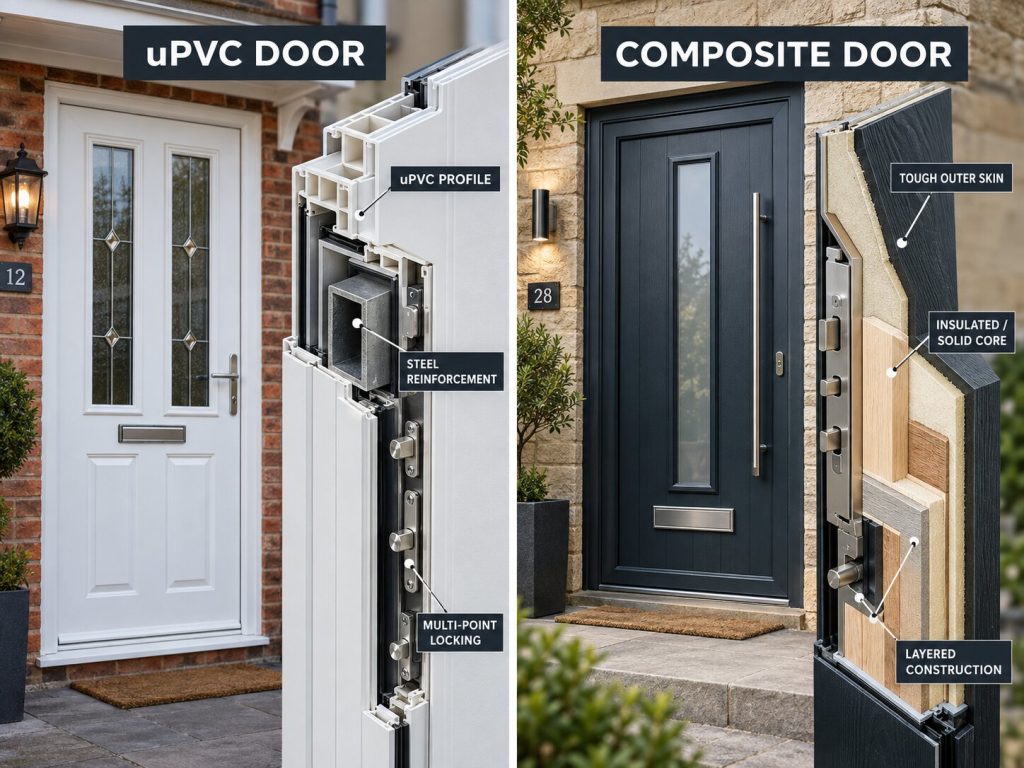
In short: uPVC is a single-material, cost-effective workhorse. Composite is a heavier, more premium door designed to look like timber while performing like modern engineering.
Durability: which lasts longer in UK conditions?
Let’s be honest—British weather throws everything at a front door. Driving rain, gusting winds, the odd surprise heatwave. Durability matters.
Composite doors tend to come out on top here. Their multi-layer construction resists warping, rotting and swelling, and a good one can last 30 years or more with minimal care. The thick core and reinforced frame help them shrug off temperature swings and day-to-day knocks.
uPVC doors are no slouch either. They resist rot and moisture well and typically last 20–25 years. The trade-off is that uPVC can become brittle towards the end of its life, and cheaper doors may discolour or warp over time, especially in exposed, south-facing spots.
One thing we’ll always stress: even the best door underperforms if it’s fitted badly. Correct installation and weathertight seals do just as much for longevity as the door itself.
Security: keeping the wrong people out
Both door types can be secure, but composite doors generally have the edge.
That extra thickness and rigid core make a composite door harder to force or kick in. Quality composite doors are tested to PAS 24, the UK standard for resistance against forced entry, and many meet Secured by Design, the police-backed security initiative. That’s worth knowing: homes fitted with Secured by Design doors are reported to be around 75% less likely to be burgled.
uPVC doors come with multi-point locking as standard, which is solid, but their lighter build makes them a little more vulnerable to impact and manipulation.
Whichever you choose, the details do a lot of the work—anti-snap cylinders, hinge bolts and laminated glass in side panels all add meaningful protection. As FENSA-registered installers, we can recommend the security upgrades that genuinely make sense for your property, rather than ones that just pad out the price.
Appearance: kerb appeal that gets the neighbours talking
Here’s where composite doors really shine. If you want a front door that turns heads for the right reasons, they’re hard to beat.
Composite doors come in a huge range of colours, finishes and styles—from smooth contemporary flush designs to traditional panelled and cottage looks. The realistic woodgrain textures give you the charm of timber without the endless sanding and repainting. Add decorative glazing, a smart knocker and the right hardware, and you’ve got a proper statement entrance.
uPVC doors have improved a lot and now come in more colours and woodgrain effects than they used to. But the choice is more limited, and they don’t quite capture that premium, timber-look finish.
When it comes to picking a composite front door in the UK, we always suggest thinking about your property style. A period home might suit a heritage colour and panelled design, while a modern build often looks best with a bold, minimalist slab. Not sure what’ll work? We’re happy to talk through styles and colours that suit your home.
Thermal performance and maintenance
Warmth and upkeep are the two things you’ll notice every single day, so they’re worth a mention.
On insulation, composite doors lead the way, with U-values as low as 1.4 W/m²K thanks to their dense, insulating core. Quality uPVC doors still perform well, using multi-chamber profiles and good seals to keep draughts out—but over the years, uPVC seals can degrade and let the cold creep back in.
On maintenance, both are refreshingly easy. A wipe down with warm, soapy water and a soft cloth is usually all either needs—no painting, no staining. Just steer clear of abrasive cleaners and pressure washers, which can damage the finish over time. A quick check of the hinges, seals and locks now and then keeps everything running smoothly.
Cost and value: where not to cut corners
Price is often the deciding factor, and there’s a clear gap here.
uPVC doors are the more affordable option, with fully fitted prices often landing somewhere around £860–£1,750 depending on design. Composite doors sit higher, typically from around £1,000 up to £3,000+ for bespoke designs with premium glazing and side panels.
But upfront cost isn’t the whole story. A composite door’s longer lifespan, better insulation and stronger security often make it better value over time—fewer replacements, lower energy bills, more peace of mind. The cheapest quote can quietly become the most expensive one if you’re replacing the door again in a decade.
Our advice? Get a clear, honest price for the exact door you want. We offer competitive pricing and straightforward guidance, with no pressure to spend more than you need to.
So, is a composite door better than uPVC?
There’s no single winner—it depends on what matters most to you.
Choose a composite door if you want premium looks, top-tier security, excellent insulation and a door built to last for decades. It’s the natural pick for a “forever” front door.
Choose a uPVC door if budget is your main concern, or you want a practical, no-fuss replacement that still performs well day to day. For back doors, utility spaces and cost-conscious projects, uPVC often makes perfect sense.
The best door is the one that suits your home, your exposure, your style and your budget. And that’s exactly the kind of thing we love helping people figure out.
Frequently asked questions
What’s the difference between a uPVC door and a composite door?
A uPVC door is made from a single rigid plastic (often with steel reinforcement), making it lightweight and affordable. A composite door combines several materials—usually a solid timber or foam core wrapped in a tough GRP or ABS skin. That layered build makes composite doors stronger, better insulated and more premium-feeling, while uPVC keeps things simple and cost-effective.
Is a composite door better than uPVC for security?
Generally, yes. A composite door’s thickness and rigid core make it harder to force, and quality models are tested to PAS 24 and often meet Secured by Design standards. uPVC doors are still secure, with multi-point locking as standard, but their lighter construction makes them slightly more vulnerable. Good locks and correct fitting boost both.
Do composite doors fade in the sun?
Modern composite doors are made with UV-resistant finishes designed to minimise fading, so any colour change tends to be gradual over many years. Darker shades like anthracite or navy absorb more heat and may show it slightly sooner, especially on south-facing entrances. For most homeowners, fading is minimal—particularly with a quality door and regular cleaning.
Are uPVC doors still a good choice for a front door?
Absolutely. A quality uPVC door offers reliable security, decent insulation and low maintenance at a friendly price. It won’t have the premium feel or lifespan of a composite door, but for many homes—and especially tighter budgets—it’s a sensible, practical choice that does the job well for years.
Which door needs less maintenance?
Both are low maintenance. Neither needs painting or staining—just an occasional wipe with warm, soapy water. Composite doors tend to hold their finish a little longer, while older uPVC can be more prone to discolouring over time. Either way, avoid harsh chemicals and pressure washers, and check the hinges and seals now and then.
How long should a composite front door UK installation last?
A well-made, correctly fitted composite door in the UK should comfortably last 30 years or more with basic care. Its layered construction resists warping, rotting and swelling, even in exposed conditions. Good installation matters as much as the door itself, which is why weathertight seals and a proper fit make all the difference to its lifespan.
Do I need FENSA certification when replacing my front door?
If your new external door has more than 50% glazing, it usually needs to comply with building regulations, and a FENSA-registered installer can certify this for you. That certificate is handy proof of compliance for insurance, warranties and future house sales. As FENSA-registered installers, we handle this side of things so you don’t have to worry about it.
Can you match a new front door to existing windows?
In most cases, yes. There’s a wide range of colours, finishes, glazing styles and hardware to choose from, so we can usually match a new door to your existing windows for a cohesive look. If you’re updating everything together, even better—we can make sure it all works as one.
Do you supply and fit doors across Essex?
We do. We’re based in Billericay and cover Essex and the surrounding areas, offering both composite and uPVC doors with a personal, professional service. From your first enquiry through to fitting and aftercare, we handle everything—and we’ll gladly come out to measure up and provide a free, no-obligation quote.
Let’s find the door you’ll love coming home to
Still torn between composite and uPVC? Don’t worry—that’s what we’re here for. Tell us what you like, what you don’t, and what your budget’s doing, and we’ll help you choose a door that ticks all the right boxes.
We’re a local, FENSA-registered team with over 35 years’ experience, a tidy approach to installation and a genuine focus on quality and aftercare. Best of all, there’s no pressure and no obligation.
Get in touch today for a free, no-obligation quote, and let’s get the ball rolling on a front door you’ll be proud of.