
Choosing new glazing for your home shouldn’t feel like trying to decode a secret language. But the moment you start leafing through brochures, you are suddenly bombarded with technical jargon. Words like “argon-filled”, “low iron glass”, “u-values”, and “warm edge spacers” can make the whole process needlessly confusing.
We completely understand why homeowners find this overwhelming. Selecting the right glass types for windows and doors is a big decision, and you just want to know what works best for your specific property. Here at Easiglaze, we have spent over 35 years helping people across Billericay, Essex, and parts of London find the perfect fit for their homes.
We are going to cut through the industry waffle and break down your choices in plain English. By the time you finish reading, you will know exactly what to look for to keep your home warm, quiet, and secure.
Why the right glass matters more than you think
It is easy to assume that all window glass does the same job. But the glass you choose dictates how comfortable your home will be all year round. The right selection helps manage your heating bills, natural light, reduces annoying street noise, and keeps condensation at bay. It also plays a massive role in your home’s security and daytime privacy.
Naturally, the frames matter too. A brilliant piece of glass will not perform well in a drafty, poorly fitted frame. But for this guide, we are focusing purely on the glazing itself, as that makes up the vast majority of the window area.
The main glass types of glass UK homeowners come across
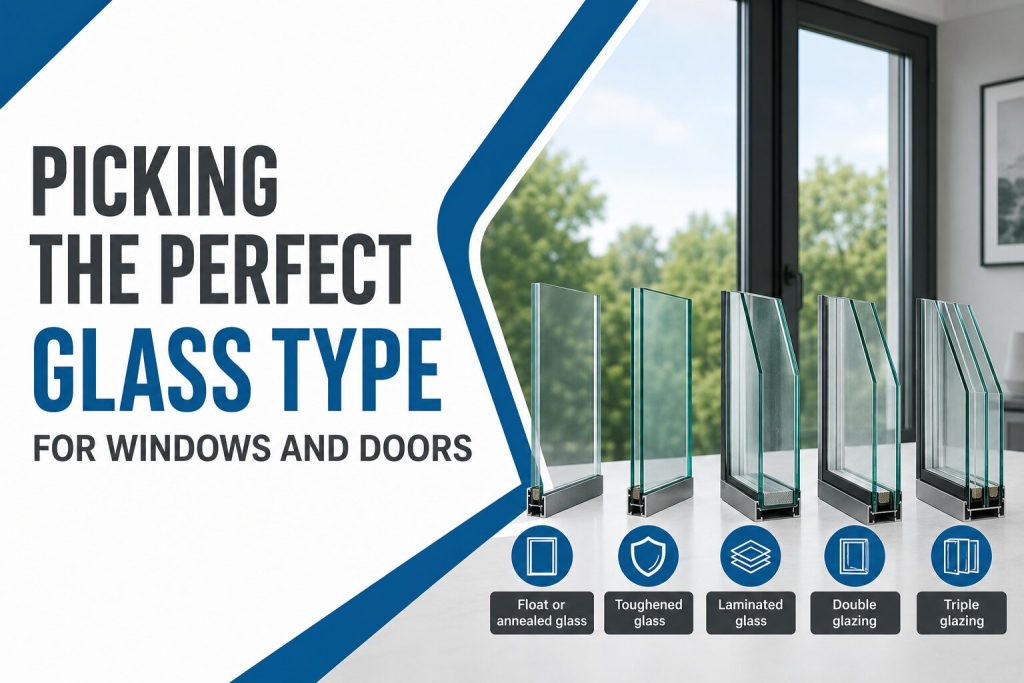
When you start shopping around, you will notice a few recurring names. Here is a quick breakdown of the main glass types windows UK suppliers offer.
Float or annealed glass (the basic starting point for window glass)
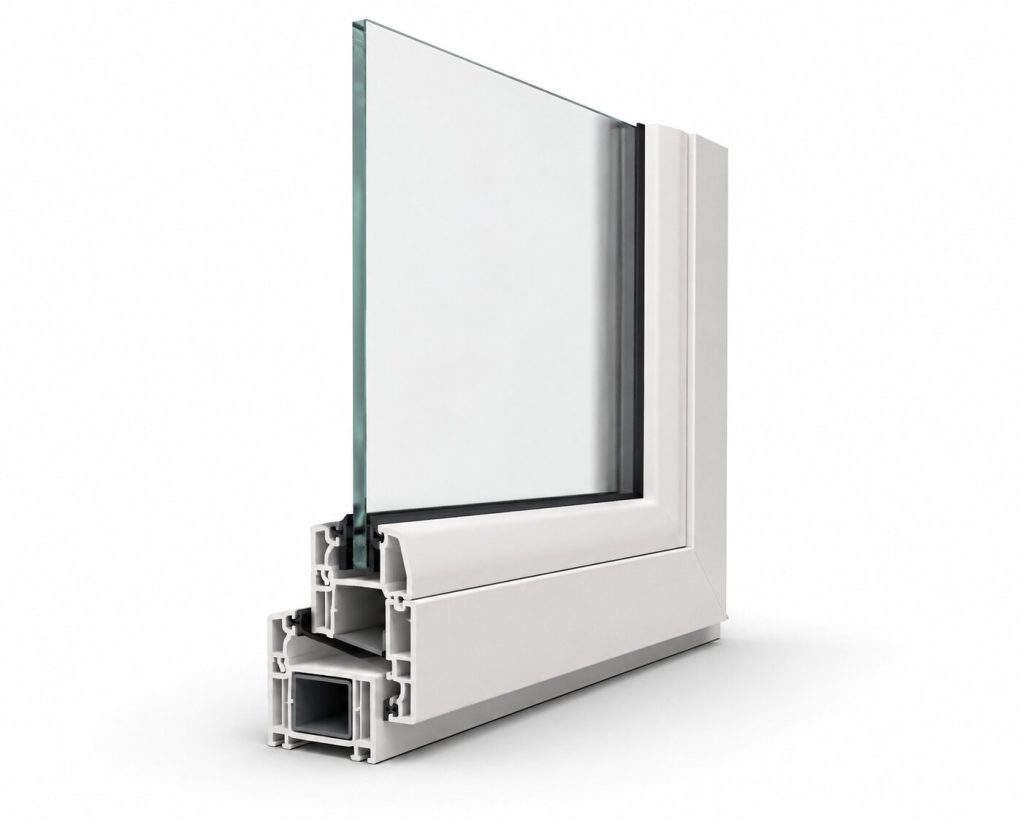
This is your standard, everyday, ordinary glass. It is manufactured by floating molten glass on a bed of molten metal to create a perfectly flat glass surface. While it used to be incredibly common, you will rarely see it used on its own in modern home installations. If float glass breaks, it shatters into large, dangerous shards, which means it doesn’t meet modern safety regulations for many areas of a home.
Toughened glass (safety glass for high-risk areas)
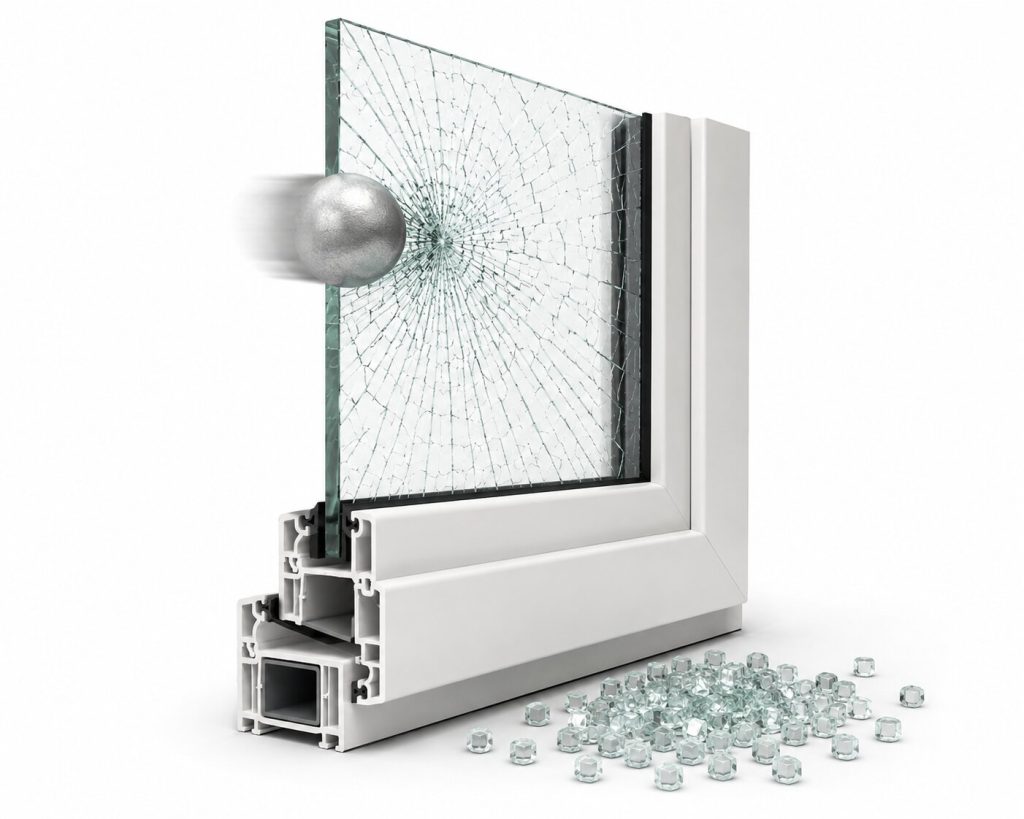
Toughened glass goes through a rapid heating and cooling process, making it up to five times stronger than standard float glass. If it does break, it crumbles into small, blunt chunks rather than sharp splinters. Building regulations require this type of safety glass in high-risk areas, like doors, bathrooms, and any low-level glazing near the floor.
Laminated glass (security and peace of mind)
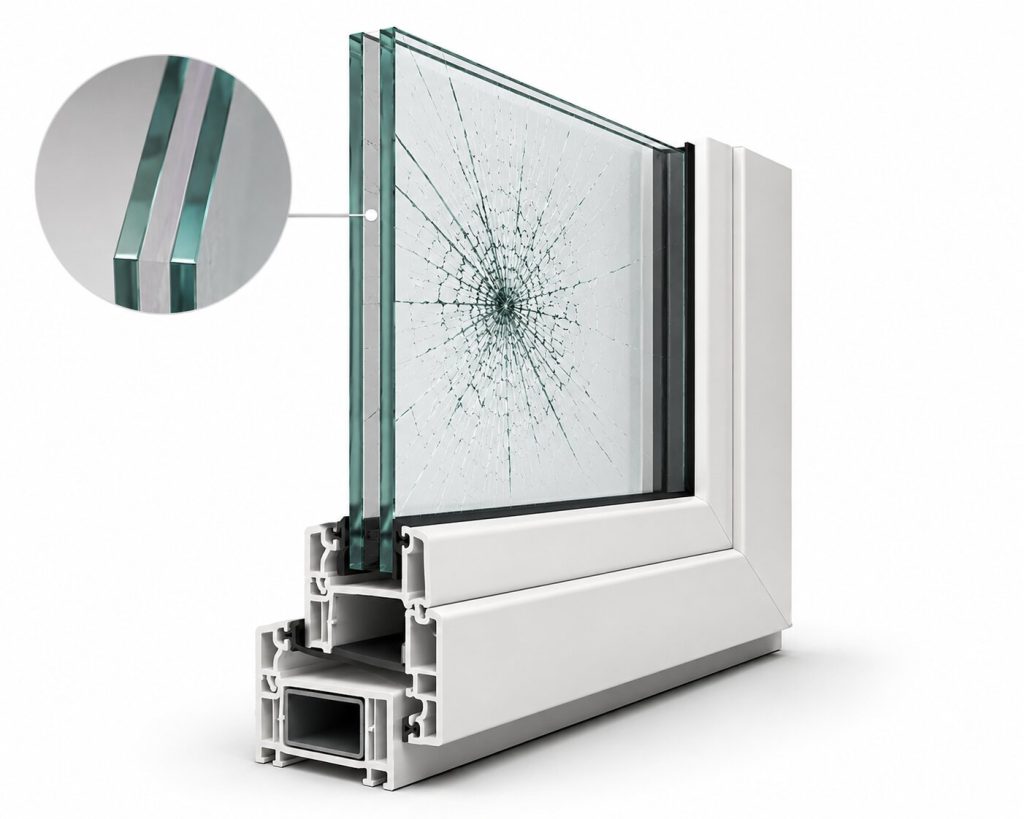
If security is a major concern, laminated glass is a fantastic option. It consists of two panes of glass bonded together with a tough plastic interlayer. If someone tries to smash it, the glass might crack, but it stays held firmly in place by the plastic layer. This makes it incredibly difficult for intruders to break through. As a bonus, that plastic layer also helps to dampen outside noise.
Double glazing (the UK standard)
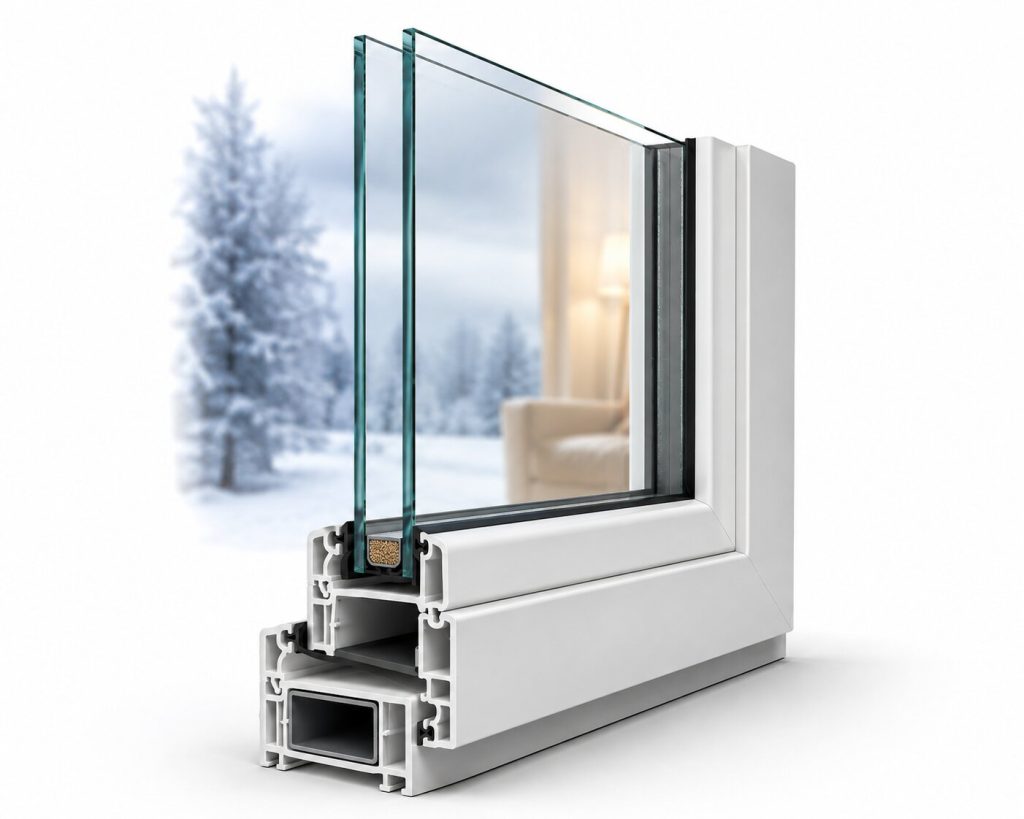
This is the baseline for modern homes. Double glazing features two panes of glass separated by a spacer bar, creating a sealed cavity. This gap is usually filled with an inert gas, like argon, which drastically slows down heat transfer. The overall performance of your double glazing depends on the thickness of the glass, the width of the cavity, the type of spacer used, and the quality of the edge seals.
Triple glazing (when it’s worth it)
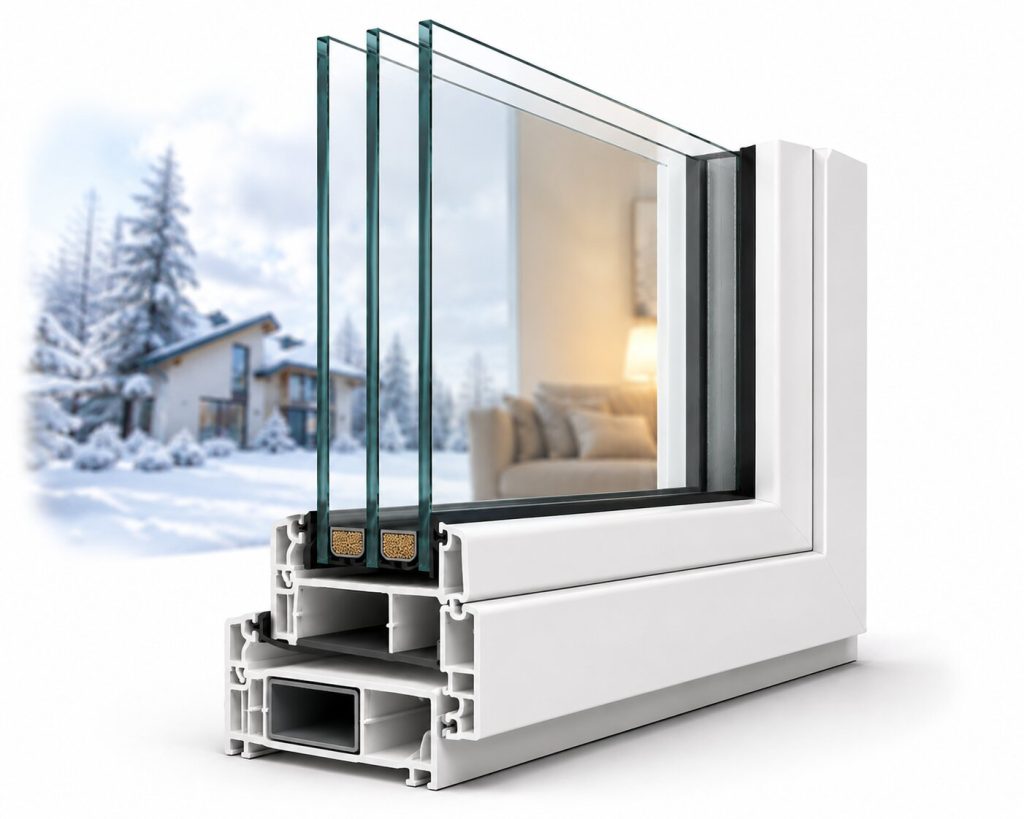
As the name suggests, triple glazing adds a third pane of glass and a second gas-filled cavity. We supply and install a lot of triple glazed windows, and they are brilliant for highly exposed properties or north-facing rooms that struggle to retain heat. They offer maximum thermal comfort and sit at the top of the energy-efficiency scale. However, they are heavier and more expensive, so they might not be necessary for a sheltered, south-facing room.
E-low emissivity and energy efficient windows
You will hear the term “low-e” or “e-low” thrown around a lot. It stands for low-emissivity. Essentially, it is a microscopically thin, transparent coating applied to one of the glass panes.
This coating works a bit like a thermos flask. It allows sunlight and natural heat to pass into your home, but reflects your indoor heating right back into the room instead of letting it escape through the window.
The low-e glass benefits double glazing units provide are incredibly noticeable. You will experience improved heat retention and feel much more comfortable sitting near your windows on a cold evening. When paired with argon gas fills and warm edge spacers (which stop cold bridging around the edge of the glass), low-e glass can seriously help manage your winter heating costs.
It is also worth mentioning condensation. Upgrading your glazing will drastically reduce condensation on the inside of the glass because the inner pane stays warmer. Just remember that proper ventilation is still needed to manage moisture inside your home.
Choosing glass by what you want to fix (a quick matchmaking guide)
Sometimes the easiest way to pick your glass is to look at the problem you are trying to solve.
If your rooms feel chilly: Ask for low-e coatings paired with high-quality double glazing. If your budget allows and the room is particularly cold, consider upgrading to triple glazing.
If the road noise is doing your head in: Request acoustic or laminated glass. Installers can also use asymmetric panes, where one pane of glass is slightly thicker than the other. This disrupts different sound frequencies and makes your home wonderfully quiet.
If security is a priority: Laminated glass is the way to go. Combine this with our high-security locks on composite doors or uPVC flush sash windows, and you will have total peace of mind.
If you need privacy: Obscure glass is graded on a scale of 1 to 5, with 5 offering the most privacy. This is ideal for bathrooms, en-suites, and front door side panels.
If glare or overheating is an issue: Solar control glass has a special coating that reduces the amount of heat entering your home from the sun, keeping south-facing rooms and conservatories cooler in the summer.
Windows vs doors (is the glass choice different?)
Your choice of glass often changes when you move from windows to doors. Because doors endure more impact and sit closer to the floor, safety and security take priority.
Whether you are looking at patio doors, bi-fold doors, or the decorative side panels of a composite door, the glass must meet strict safety standards. You will almost always need toughened or laminated glass in these areas. Laminated glass is particularly popular for back doors, as it provides that extra layer of defense against forced entry.
Questions to ask before you buy (so you don’t get bamboozled)
Before you hand over a deposit to any installer, make sure you ask a few key questions:
- What u-value can you achieve with this specific glass unit?
- Is the glass toughened or laminated where building regulations require it?
- What gas fill and spacer bar type are you using?
- What exactly does the warranty or guarantee cover?
- Are you FENSA registered?
- Who will actually be installing the windows, and what is your aftercare process?
Why getting the installer right matters
Even the most expensive, highly rated glass will fail if it is installed badly. Gaps, broken seals, and poor fitting will completely ruin your home’s energy efficiency.
This is why choosing a trusted installer is just as important as choosing the glazing. At Easiglaze, we bring over 35 years of hands-on experience to every single job. We are fully FENSA registered, meaning our work complies with all current building regulations. We also provide a 10-year insurance-backed guarantee to protect your investment for a decade. Our team is known across Essex for tidy, professional installations that stand the test of time.
Frequently asked questions
What’s the best glass for energy efficiency in the UK?
The most energy-efficient option is triple glazing combined with a low-e coating, warm edge spacers, and an argon gas fill. If you are sticking with double glazing, ensure it has a low-e coating and argon gas to maximise your heat retention.
Do I need toughened glass in windows and doors?
Yes, building regulations mandate toughened or safety glass in critical locations. This includes all glass in doors, glass adjacent to doors, and any window where the glass is positioned lower than 800mm from the floor.
Is laminated glass worth it for security?
Absolutely. Because the plastic interlayer holds the shattered glass together, it makes it extremely difficult for an intruder to gain entry, buying you valuable time and peace of mind.
What are the real low-e glass benefits double glazing offers?
Low-e glass traps your home’s radiant heat inside while still letting the sun’s warmth in. This eliminates cold spots near windows, makes your heating system work less intensely, and lowers your carbon footprint.
Is there a huge difference between double and triple glazing?
Not necessarily. While it offers superior thermal performance, it is heavier and costs more. For highly exposed homes it is a fantastic investment, but a high-quality double glazed unit is often more than enough for a standard property.
Can new glazing reduce condensation?
Yes, modern energy-efficient glazing keeps the inner pane of glass much closer to your room’s temperature, which stops moisture from condensing on it. However, you still need to ventilate your home to let humid air escape.
What’s the best glass for noise reduction?
Acoustic glass or laminated glass is best for blocking outside noise. Using two panes of glass with different thicknesses also works brilliantly to break up sound waves from busy roads.
How do I choose privacy (obscure) glass for bathrooms and front doors?
Look at the privacy rating scale. A level 1 glass provides very light obscuration, while a level 5 provides maximum privacy where shapes cannot be distinguished. Level 4 or 5 is generally recommended for bathrooms.
Finding the right fit for your home
Picking the perfect glass ultimately comes down to what you value most. You might want to slash your heating bills, block out the sound of morning traffic, or simply make your home a bit more secure. Once you know your main priority, choosing the glass becomes surprisingly simple.
If you would like a hand choosing the right glazing, get in touch with us at Easiglaze. Tell us what you are trying to improve, and we will talk you through the best options for your property.